
What if that frustrating chip in your bathtub didn’t require a sledgehammer and a week of plumbing chaos to fix? It’s natural to feel a sense of dread every time you see that mark, worrying that a damaged surface means an expensive, disruptive bathroom refit is your only option. You might also fear that a repair will leave behind a visible, patchy blemish that ruins the aesthetic of your room. Understanding how much does bath chip repair cost is the first step toward reclaiming your peace of mind and your bathroom’s pristine appearance without the stress of a full replacement.
In this 2026 price guide, we’ll provide a clear, honest breakdown of the investment required for professional restoration across London and the M25. You will discover how a specialist repair offers a seamless, invisible finish that lasts for years, whilst saving you from the mess and significant expense of unnecessary plumbing work. We will also compare the value of expert craftsmanship against the risks of DIY kits, helping you make an informed choice that protects both your home and your budget.
Key Takeaways
- Learn exactly how much does bath chip repair cost in 2026 and why professional restoration is a fraction of the price of a full bathroom refit.
- Discover how choosing restoration over replacement prevents cast iron and acrylic baths from entering landfills whilst avoiding the need for expensive skip hire and tiling.
- Understand the technical difference between a temporary DIY patch and a specialist smart repair that provides a durable, colour-matched, and completely invisible finish.
- Gain insights into regional pricing factors within London and the M25, including how travel logistics and bespoke on-site tinting influence the final investment.
Understanding the Basics: What Determines Bath Chip Repair Costs?
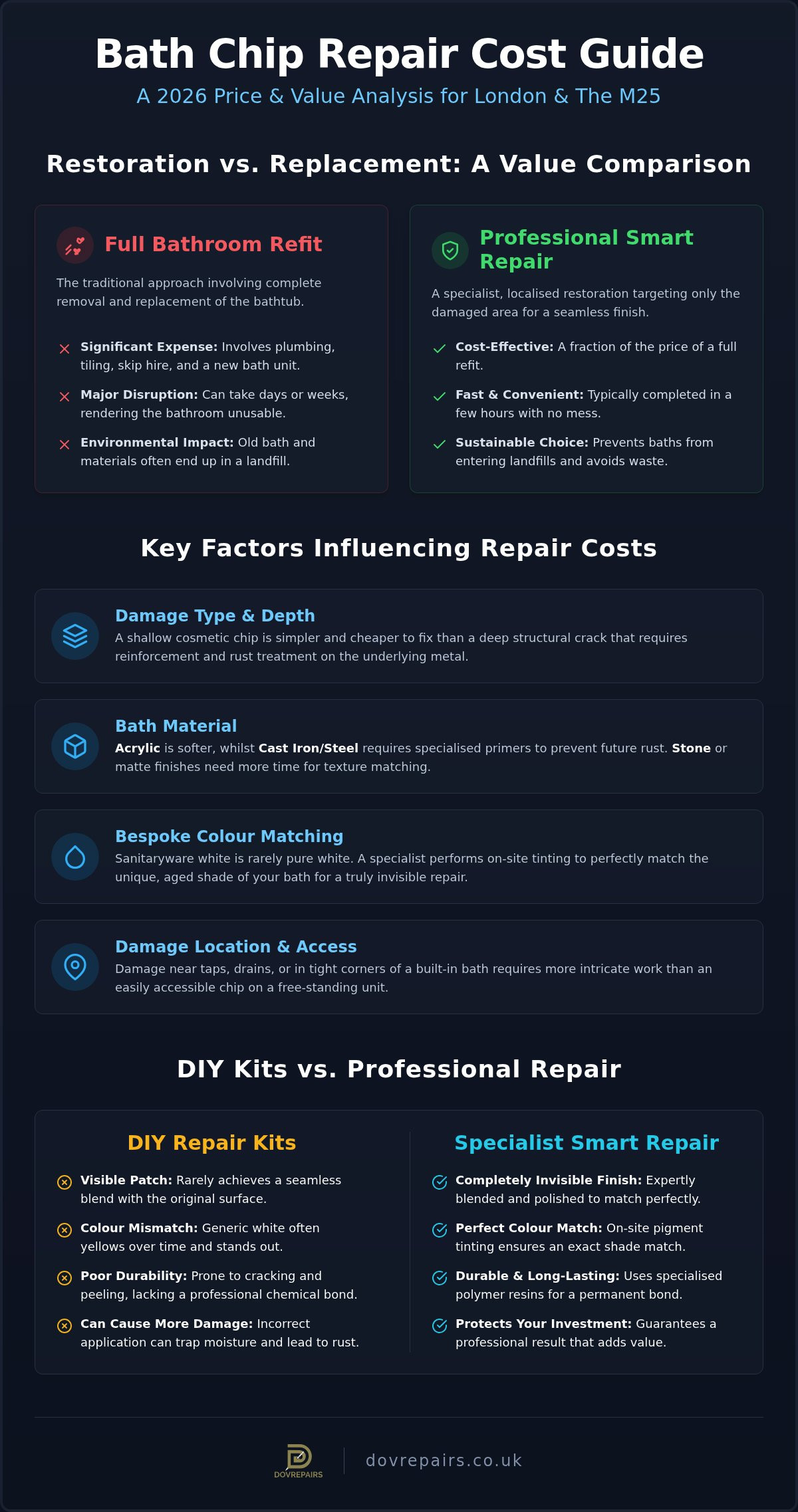
When you begin looking into how much does bath chip repair cost, it’s essential to understand that not all damage is equal. A professional “smart repair” isn’t a quick fix with a bottle of white paint; it’s a technical process involving the precise application of specialised polymer resins. These resins are engineered to bond with your specific bath surface, whether that’s modern acrylic or vintage cast iron. Several key factors influence the technical complexity of this work:
- The surface material: Acrylic, steel, and cast iron each require different primers and bonding agents.
- Damage depth: Shallow chips are faster to fix than deep gouges that reach the base metal or fibreglass.
- Location: Damage near tap holes or the drain is more intricate to seal and finish properly.
Chip Repair vs. Full Re-Enamelling
A smart repair is a localised restoration that blends seamlessly with the original surface. This method is ideal when the rest of your bath is in good condition and only has one or two isolated marks. It’s a far more economical choice than full Bathtub refinishing, which involves stripping and coating the entire unit. Because a spot repair focuses only on the damaged area, it avoids the extensive preparation time, chemical stripping, and higher material costs associated with full resurfacing. Choosing a localised fix is also more sustainable, as it preserves the existing surface and keeps the bath out of the landfill.
Material Matters: Acrylic, Enamel, and Stone
The material of your bath significantly influences the technical approach and labour time. Acrylic baths are relatively soft, making them easier to sand and polish, but they require specific chemical bonding agents to ensure the resin doesn’t peel away over time. Cast iron or steel baths are much harder. These materials require specialised high-bond primers to prevent moisture from getting under the repair and causing rust. Surface texture also plays a role. A standard high-gloss white bath is straightforward for a specialist to match. However, if your bath has a matte finish or a bespoke stone texture, the artisan must spend more time recreating that specific look on-site to ensure the repair is truly invisible.
Key Factors Influencing the Price of Professional Restoration
While the initial question is often how much does bath chip repair cost, the final quote is shaped by the technical reality of the damage. A tiny surface nick is a different prospect than a deep gouge that has exposed the underlying metal. If the damage has reached the steel or cast iron, oxygen and moisture can quickly lead to rust. This requires immediate stabilisation and anti-corrosion treatment before the aesthetic restoration can even begin. The depth of the damage dictates the volume of specialised resin required and the time needed for each layer to cure properly.
White is rarely just “white” in the world of sanitaryware. Every manufacturer has a specific hue, and years of cleaning or sunlight exposure can alter the original shade of your enamel. Our specialists carry a range of base pigments to perform bespoke on-site tinting. By hand-blending these resins, we ensure the repair matches the aged enamel perfectly. The final result is achieved through multi-stage polishing, moving from coarse to ultra-fine abrasives until the gloss level is identical to the surrounding area. This craftsmanship ensures the repair is invisible even under bright bathroom lighting.
The “Hidden” Cost of Multiple Damages
Fixing several marks at once is always more cost-effective for the homeowner. Most specialists structure their pricing so the first chip carries the bulk of the cost, covering travel and setup time. Subsequent repairs during the same visit are usually significantly cheaper because the technician is already on-site with their tools prepared. If you have noticed minor snags in your bath, sinks or shower trays, it’s wise to have them addressed simultaneously. This approach not only saves money but also ensures the longevity of your entire bathroom suite by preventing minor chips from developing into structural problems or unsightly rust spots. For instance, if your ceramic basin has also suffered damage, a professional sink chip repair London service carried out during the same visit can restore your basin to a flawless finish without the need for replacement. Similarly, if your shower tray has developed any fractures, a professional shower tray crack repair carried out during the same visit can prevent water from seeping through to the subfloor below.
DIY Kits vs. Professional Repair: A Cost-Value Analysis
At first glance, a £20 kit from a local hardware shop seems like a bargain when compared to the question of how much does bath chip repair cost for professional services. However, this initial saving is often an illusion. DIY kits typically contain basic enamel paint or air-drying fillers that lack the structural integrity of professional materials. These consumer products struggle to bond permanently with the smooth surface of a bath, leading to a “blob” repair that is not only visible but also prone to peeling within weeks of regular use.
The true value of a professional service lies in the permanence of the result. A professional repair typically lasts 10-15 years, whilst DIY fixes often fail within months. For tenants across London and the M25, this is a crucial distinction. Attempting a quick fix to save money can backfire during a final inspection. A landlord or letting agent will easily spot a patchy, discoloured repair, which may lead them to claim for a full replacement from your security deposit. Investing in a specialist restoration ensures the finish is invisible and durable, protecting your deposit and your peace of mind.
The Technical Superiority of Professional Tools
Specialists use industrial-grade equipment that simply isn’t available in high-street kits. One of the most significant differences is the use of UV curing lights. Whilst DIY fillers require hours to air-dry, during which time they can attract dust and hair, professional resins are cured instantly with specific light frequencies. This creates a rock-hard finish that is immediately ready for use. We also utilise advanced bonding agents that create a chemical link between the repair material and the original surface, ensuring the fix won’t flake away when exposed to hot water and cleaning chemicals.
The Aesthetic Risk of DIY
Achieving a seamless blend requires a high level of artisan skill. Many homeowners find that the “white” filler in their kit is a jarring contrast to their actual bath colour. Even more problematic is the sanding process. Without professional-grade abrasives and a steady hand, it’s incredibly easy to over-sand the surrounding area, permanently dulling the original factory glaze. This creates a large, matte patch that is far more noticeable than the original chip. If a DIY attempt fails, the eventual bill for a specialist may increase, as the technician must first carefully remove the incorrect materials before they can begin the proper restoration. Understanding how much does bath chip repair cost involves factoring in these long-term risks of a “cheap” alternative.
Regional Pricing: Bath Repair Costs in London and the M25
Geographic location is a primary variable when calculating how much does bath chip repair cost. In London, homeowners and businesses often find that service prices carry a 15-25% premium compared to other parts of the UK. This isn’t an arbitrary increase; it reflects the significantly higher operational costs of providing on-site services within the capital. From higher insurance premiums to the logistical complexity of moving equipment between appointments, the cost of doing business in London inevitably influences the final quote.
Navigating the Capital: Logistics and Fees
Logistics play a massive role in the pricing structure for Greater London. Service fees often incorporate the daily costs of the Congestion Charge and the Ultra Low Emission Zone (ULEZ). Parking availability in central boroughs is another significant hurdle. If a technician spends forty minutes finding a legal space or pays high hourly parking rates, this time and expense must be accounted for in the professional’s overheads. These factors make it vital to choose a service provider who is transparent about their regional fee structure.
DovRepairs is strategically located to serve this region effectively. By covering the entire M25 area from our base in Dartford, we provide a reliable bridge between Kent and the capital. Choosing a local specialist who understands these regional nuances is essential for keeping call-out fees manageable. It ensures your technician arrives with the right permits and local knowledge to complete the job without unexpected delays. For more details on our specific services in the city, see our guide on Professional Bath Chip Repair London.
Commercial vs. Residential Pricing in London
The type of property also influences how much does bath chip repair cost. For residential homeowners, the focus is often on a single, high-quality restoration. However, for London landlords and property managers, bulk repair rates are often available. Addressing multiple chips across several units in one building significantly reduces the “per-chip” price. It minimises travel and setup time, making it a highly efficient way to maintain a property portfolio whilst keeping costs predictable.
We also work closely with new-build developers in Kent and London. During the final “snagging” phase of a project, it’s common for baths or shower trays to suffer minor transit or installation damage. Professional restoration is the standard solution here. It’s far faster and more cost-effective than replacing a fitted unit and risking damage to fresh tiling or plumbing. If you need a transparent quote for your property, you can request a tailored quote for your bath repair today.
Why Restoration is the Sustainable Choice for 2026
Choosing to restore rather than replace your bathroom fixtures is one of the most impactful decisions you can make for your home and the environment. When homeowners ask how much does bath chip repair cost, they are often pleasantly surprised to find that the financial saving is matched by a significant reduction in waste. A full replacement is a disruptive process that frequently involves breaking tiles, hiring skips, and engaging multiple tradespeople. Restoration, by contrast, is a surgical procedure that addresses the damage directly whilst leaving the rest of your bathroom completely undisturbed.
The speed of a professional repair is another major advantage for busy London households. Whilst a full refit can leave your bathroom out of action for a week or more, a specialist chip repair is typically completed in just a few hours. Because we use advanced resins that cure quickly, your bath is often ready for use the very next day. This efficiency avoids the secondary costs of skip hire and the environmental burden of transporting heavy cast iron or acrylic units to a landfill. By opting for a smart repair, you are actively participating in the circular economy and preserving high-quality materials that were built to last.
Save Your Bathroom, Save the Planet
The carbon footprint of manufacturing and transporting a new bathtub is substantial. Acrylic and steel units require high energy levels to produce, and the logistics of delivering these heavy items across the M25 adds to their environmental impact. Repairing is the favourite choice for eco-conscious homeowners who want to reduce their household’s carbon footprint. Expert surface restoration allows you to maintain the character of your original bathroom suite without the guilt of contributing to the millions of tonnes of construction waste produced in the UK each year. It’s a conscientious approach that values craftsmanship over the “throwaway” culture of modern retail.
Choosing DovRepairs for Your Restoration
At DovRepairs, we pride ourselves on being conscientious specialists who deliver results that meet the highest expectations. Our commitment to quality means we don’t just “patch” a chip; we restore the surface to its original integrity with guaranteed workmanship. We understand the unique needs of London and Kent residents, offering a dependable, personal service that simplifies the repair process from start to finish. If you want to understand exactly how much does bath chip repair cost for your specific project, our team is ready to help. We invite you to Contact DovRepairs for a bespoke quote and discover how easy it is to breathe new life into your bathroom suite.
Invest in Long-Lasting Bathroom Restoration
Professional restoration is a surgical, cost-effective alternative to the disruption of a full bathroom refit. By focusing on precision and craftsmanship, you can achieve an invisible finish that protects your fixtures for years to come. Whether you’re a tenant looking to secure your deposit or a homeowner committed to sustainable living, understanding how much does bath chip repair cost is the first step toward a stress-free solution. Choosing a specialist ensures that your bath remains in place, avoiding the mess of plumbing work and the environmental impact of landfill waste.
Our team is dedicated to providing high-quality results that meet the most exacting standards. We offer professional, guaranteed workmanship across London and the M25 region, utilising expert colour-matching to ensure every repair is perfectly blended. We invite you to Get a Free Quote for Your Bath Repair and experience the relief of a beautifully restored bathroom. Let us help you protect your home with a service that is as reliable as it is conscientious.
Frequently Asked Questions
How much does it cost to fix a small chip in a bath in London?
When considering how much does bath chip repair cost in London, it’s important to remember that the final investment is shaped by the technical complexity of the damage and the surface material. In the capital and across the M25, logistical factors like ULEZ fees and parking availability are incorporated into the service quote. Whilst a professional restoration is significantly more affordable than a replacement, a bespoke assessment is necessary to provide an accurate and transparent figure.
Is it cheaper to repair or replace a chipped bathtub?
Repairing is almost always the more economical choice for your home. When you factor in the secondary costs of a full replacement, such as skip hire, new wall tiles, and professional plumbing services, the total bill for a new unit can be several times higher than a restoration. A smart repair addresses the damage in situ, preserving your existing bathroom suite and saving you from the extensive mess, noise, and disruption of a full bathroom refit.
How long does a professional bath chip repair take to complete?
Most professional chip repairs are completed within two to three hours during a single visit. The exact duration depends on the depth of the damage and whether multiple chips require attention. Because we use advanced UV-curing technology, the specialised resin hardens instantly, allowing our specialists to sand and polish the area to a high-gloss finish without delay. This efficiency ensures your bathroom is back in service quickly, with minimal disruption to your daily household routine.
Can you still see the chip after a professional repair?
A high-quality professional repair is designed to be virtually invisible to the naked eye. Our specialists perform bespoke on-site colour matching, hand-tinting the resins to perfectly mimic the unique shade and depth of your bath’s original enamel. By carefully recreating the surface texture and gloss level through multi-stage polishing, we ensure the restored area blends seamlessly with the surrounding surface. The result is a durable finish that is undetectable, even under bright bathroom lighting.
Do you provide a guarantee for bath surface repairs?
Yes, we provide guaranteed workmanship on all our bath surface restorations across London and the M25 region. This guarantee reflects our commitment to high standards and the technical expertise we bring to every project. We ensure that the bond remains stable and the colour doesn’t fade or yellow over time. Comprehensive after-care support is also provided, giving you peace of mind that your investment is protected by a reliable and conscientious specialist partner.
Can you fix chips in acrylic, steel, and cast iron baths?
We specialise in restoring a wide variety of hard surfaces, including acrylic, pressed steel, and traditional cast iron baths. Each material requires a specific technical approach and different bonding agents to ensure a permanent fix. Whether your bath is a modern fibreglass unit or a vintage roll-top heirloom, our specialists use the appropriate polymer resins and primers to achieve a durable finish. This process prevents further deterioration and protects the underlying material from moisture and rust.
What happens if I ignore a chip in my enamel bath?
Ignoring a chip in an enamel bath can lead to more significant and expensive problems. In steel or cast iron baths, exposed metal will quickly begin to rust when it comes into contact with water and steam. This rust can spread under the remaining enamel, causing it to bubble and flake away. Addressing the damage early helps you manage how much does bath chip repair cost effectively by preventing the need for more complex restoration work later. The same principle applies to other bathroom surfaces; for example, if your basin has suffered a chip, prompt sink chip repair London specialists can restore it before the damage worsens. Similarly, leaving a crack unattended in your shower floor can allow water to penetrate the subfloor, which is why timely shower tray crack repair is equally important.
How soon can I use my bath after the repair is finished?
Whilst our UV-curing process hardens the resin instantly, we typically recommend waiting 24 hours before fully submerging the repair in hot water. This allows the specialised bonding agents to reach their maximum strength and ensures the long-term durability of the finish. You can usually use the rest of the bathroom immediately, but avoiding direct contact with the repaired area for the first day is a sensible precaution to protect the integrity of the restoration.