
You’ve just finished prepping a Sunday roast when the light catches a series of jagged lines across your worktop where the chopping board slipped. It’s a heart-sinking moment that instantly triggers anxiety about lost rental deposits or the staggering expense of a full kitchen renovation. We understand that your kitchen is the heart of your home, and seeing it damaged can feel like a permanent flaw in an otherwise perfect space. If you’re currently wondering how to fix knife marks on kitchen counter surfaces without the stress of a total replacement, you’re in the right place.
Restoring your surfaces is an art of chemistry and craftsmanship rather than just a quick buffing job. In this 2026 guide, we’ll show you how to assess the depth of the damage and apply the correct treatments to achieve a seamless, invisible finish. You’ll discover which materials are safe for DIY repairs, whilst also learning when a specialist’s touch is required to ensure your counters remain food-safe and durable. By choosing restoration over replacement, you can save significant money and help prevent functional materials from ending up in a London landfill.
Key Takeaways
- Accurately identify your worktop material using sight and touch tests to avoid applying the wrong treatment to sensitive stone or composite surfaces.
- Master the “fingernail test” to gauge scratch depth, helping you determine if a DIY approach is safe or if you need a professional touch.
- Learn the precise steps for how to fix knife marks on kitchen counter timber and laminate whilst ensuring the finish remains completely food-safe.
- Understand why stone and quartz require specialised UV-stable resins instead of simple waxes to prevent unsightly “starring” or further cracking.
- Save on the high costs of a full renovation and reduce your environmental impact by opting for restoration that keeps quality materials out of landfill.
Identifying Your Worktop Material: Why the Fix Depends on the Surface
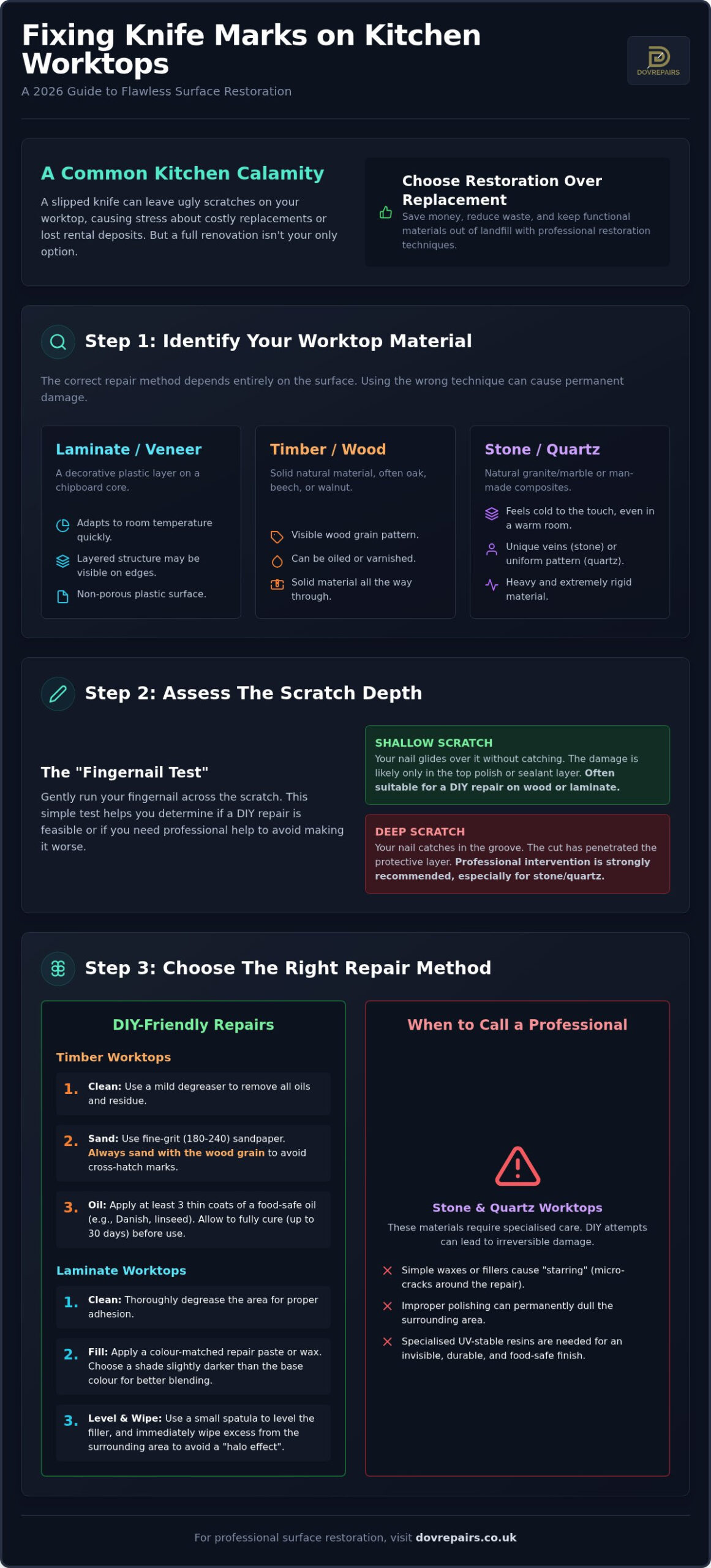
Before you reach for the sandpaper or a repair kit, you need to be certain about the material under your hand. Successful restoration relies entirely on matching the repair chemistry to the specific surface. If you’re a tenant or have recently moved into a new home, you might not know exactly what was installed. Understanding different types of countertop materials is the first step in ensuring you don’t turn a small scratch into a permanent eyesore.
A simple “touch and sight” test is your best diagnostic tool. Natural stone feels cold to the touch even in a warm room, whilst laminate quickly adapts to the ambient temperature. Porosity also dictates the repair method; stone is naturally porous and might absorb oils from the knife, whereas laminate is a non-porous plastic shield. It’s a common misconception that all damage is equal. A scratch on quartz is often just a disruption of the surface polish, but a cut in laminate is a breach of its protective skin. Knowing how to fix knife marks on kitchen counter surfaces starts with this crucial identification.
Laminate and Veneer Surfaces
Laminate worktops consist of a thin, decorative plastic layer bonded to a compressed chipboard core. You can usually identify these by looking at the underside or the edges where the layered structure might be visible. The primary danger here isn’t just the look of the mark. Deep knife cuts allow water to seep into the wood-based core, causing it to swell and rot. This transforms an aesthetic issue into a structural failure. If you’re looking for how to fix knife marks on kitchen counter laminate, speed is essential to seal the surface before moisture gets in.
Natural Stone, Quartz, and Solid Surfaces
Granite and marble are easily spotted by their unique, irregular veining and icy temperature. Man-made composites, such as quartz or solid surfaces like Corian, often have a more uniform pattern and a slightly softer feel than natural granite. To find shallow scratches on these polished surfaces, use the “light test.” Hold a torch or your phone light at a low angle across the counter. Scratches that are invisible from above will suddenly cast tiny shadows. Unlike laminate, these materials are solid all the way through, meaning they won’t swell, but they can “star” or crack if the initial mark is ignored.
How to Fix Minor Scratches on Wood and Laminate Counters
Before you begin any restoration work, the surface must be surgically clean. Food oils, grease, and old wax will prevent repair materials from bonding, often leading to a patchy or peeling finish. Scrub the affected area with a mild degreaser and dry it thoroughly. If you’re researching how to fix knife marks on kitchen counter surfaces, you might have seen advice suggesting permanent markers to hide scratches. We advise against this; markers don’t fill the physical indentation and the ink often shifts to an unnatural purple or green hue over time. A proper repair requires physical filler or careful sanding to restore the surface level.
Step-by-Step DIY Wood Repair
Timber is one of the few materials that truly rewards a DIY effort because it’s solid and sandable. To remove shallow knife marks, use a fine-grit sandpaper, typically between 180 and 240 grit. Always sand in the direction of the wood grain. If you sand across the grain, you’ll create permanent cross-hatch marks that are harder to remove than the original scratch.
- Apply the Finish: Once the mark is gone, apply a food-safe oil such as Danish or linseed oil.
- Layering: Apply at least three thin coats, allowing each to dry.
- Curing: Remember that whilst the oil may feel dry to the touch quickly, most food-safe finishes require up to 30 days to fully cure and become completely non-toxic and stable.
Laminate Colour Blending Techniques
Laminate requires a different approach because you cannot sand it without destroying the decorative pattern. Instead, you’ll need a colour-matched repair paste or wax. Selecting the correct shade is the most difficult part; we recommend choosing a tone slightly darker than the base colour, as light fillers tend to stand out more against the wood-grain or stone patterns of the laminate.
Apply the filler with a small spatula, leveling it whilst it’s still pliable. To avoid the “halo effect”—a dull ring of excess filler around the scratch—wipe away any residue from the surrounding area immediately with a damp cloth. If the damage has breached the plastic layer and reached the chipboard core, it’s vital to seal the repair with a clear laminate sealer to prevent water ingress. For those dealing with deep gouges that compromise the surface, seeking a professional worktop repair can ensure the finish is both invisible and watertight. This careful approach keeps your kitchen looking premium whilst avoiding the waste of a full replacement.
The Complexity of Repairing Knife Marks on Quartz and Stone
Repairing stone surfaces requires a shift from simple maintenance to material science. Whilst wood can be sanded back, stone and quartz are unforgiving materials. If you are trying to understand how to fix knife marks on kitchen counter stone, the first thing to realise is that simple waxes won’t suffice. Waxes merely sit on the surface and wash away with warm soapy water. A professional restoration involves UV-stable resins that create a mechanical bond with the stone. This ensures the repair doesn’t just look good under the kitchen lights but actually withstands the daily rigours of a busy household.
There is a significant risk of “starring” if you attempt to sand stone incorrectly. This occurs when the pressure of a tool creates tiny, white, star-shaped fractures beneath the surface. These are permanent and often more unsightly than the original knife mark. Professionals match the intricate veining of marble or the granular pattern of granite by layering different pigments within the resin, a process that requires a keen eye for colour and texture. Achieving this level of detail is what separates a visible patch from a truly invisible restoration.
Quartz and Composite Challenges
Quartz is an engineered material with a high resin content, typically around 93 percent. This makes it incredibly durable, but it also means it is sensitive to heat. A common DIY mistake is attempting to buff out a scratch with a high-speed drill attachment. The resulting heat friction can cause the resin to “burn,” leaving a permanent dull patch that no amount of polishing can fix. Matching the finish is equally difficult, as modern kitchens now feature everything from high-gloss to “leathered” or matte textures. Each requires a specific abrasive sequence to blend the repair into the surrounding area.
Natural Stone Restoration
Natural stones like granite and marble present their own unique hurdles. Marble is particularly sensitive to acids; it requires pH-neutral cleaning before any repair can begin to avoid “etching” the surrounding area. When how to fix knife marks on kitchen counter granite is the goal, the challenge is filling deep gouges without losing the natural, crystalline texture that makes the stone beautiful. This is often achieved using diamond polishing pads of varying grits, moving from coarse to incredibly fine to restore the original factory shine. This level of precision is why stone restoration is considered a specialist craft that preserves the longevity of your investment.
DIY vs Professional Restoration: When to Call a Specialist
Deciding whether to tackle a scratch yourself or call in an expert depends on more than just your confidence with a toolkit. You need a reliable way to assess the damage before you accidentally make it worse. The most effective method is the “fingernail test.” Run your nail gently across the mark; if it catches in the groove, the damage has likely bypassed the surface finish and entered the structural layer of the material. When you’re researching how to fix knife marks on kitchen counter surfaces, this physical catch is the signal that a simple polish won’t suffice. Botched DIY attempts often result in a permanent “haze” or uneven textures that are more difficult and expensive for a specialist to rectify later.
The “Point of No Return” for DIY
There are specific scenarios where DIY intervention is simply too risky. If a knife mark has fully penetrated the decorative layer of laminate, you’re exposing the chipboard core to moisture. This is especially dangerous near sinks or hobs where steam and splashes are constant. For those living in rental properties across London, this is the critical moment to save your security deposit with surface repair rather than attempting a temporary wax fix. Professional intervention ensures the seal is watertight and the finish is indistinguishable from the original, preventing a landlord from claiming for a full replacement. Damage across seams or joints also requires a specialist’s touch to prevent the worktop from pulling apart over time.
What a Professional Specialist Offers
A conscientious specialist brings more than just tools; they bring a deep understanding of surface chemistry. Whilst a DIY kit might offer three basic colours, a professional uses industrial pigments to achieve a perfect match for the unique veining in your stone or the specific grain of your wood. These repairs are typically completed on-site within a few hours, meaning your kitchen isn’t out of action for days. The result is a durable, invisible finish that can withstand heat and moisture just as well as the original surface. If you’re preparing a property for sale in the M25 area, a professional worktop repair provides a guarantee of quality that reassures potential buyers and protects your home’s value. Choosing restoration over replacement isn’t just about saving money; it’s about maintaining high standards whilst being mindful of our environmental impact.
Sustainable Kitchen Maintenance: The DovRepairs Approach
Choosing to restore rather than replace your kitchen surfaces is a conscientious decision that benefits both your bank balance and the planet. Many homeowners fall into the “landfill trap” because they assume that visible damage is irreversible. However, a specialist restoration can breathe new life into a tired worktop, preventing perfectly functional materials from being discarded. Learning how to fix knife marks on kitchen counter surfaces is a practical skill for minor issues, but for a truly seamless finish, professional intervention ensures your kitchen remains a central home feature without the waste of a full renovation.
Our approach across London and the M25 is built on the foundation of high standards and environmental responsibility. We provide guaranteed workmanship that gives you peace of mind, whether you’re a homeowner looking to maintain your property or a tenant needing to pass a strict end-of-tenancy inspection. By focusing on repair, we help you avoid the stress of a major construction project whilst delivering results that meet the highest expectations of quality and longevity.
Eco-Friendly Home Improvements
The environmental cost of manufacturing new stone worktops is significant, involving energy-intensive extraction and international shipping. By opting for a local worktop repair in London, you’re choosing a solution with a significantly lower carbon footprint. This commitment to sustainability is also a vital part of the new build snagging process, where we help developers and new homeowners fix minor installation damage instead of replacing entire units. This prevents vast amounts of functional material from ending up in landfill, making it a greener choice for the modern home.
Protecting Your Investment
Once your counter has been professionally restored, simple changes in your kitchen behaviour can prevent future damage and keep the surface looking pristine. We recommend a few practical steps to maintain the integrity of your worktop:
- Use the Right Boards: Always use a chopping board. Wooden boards are gentler on knife edges, whilst heavy-duty plastic is excellent for hygiene. Never cut directly on stone or laminate, as even the toughest quartz can eventually show wear.
- Gentle Cleaning: Avoid abrasive scouring pads or harsh chemical cleaners on the repaired area. Warm, soapy water and a soft microfibre cloth are usually all you need to maintain the finish.
- Professional Refreshes: For high-traffic areas, such as around the sink or food prep zones, scheduling a professional refresh every few years can keep the surface looking pristine and prevent small scratches from becoming deep gouges.
By treating your worktop with care and choosing restoration over replacement, you’re not just maintaining an aesthetic; you’re preserving the longevity of your home’s most hardworking surface whilst protecting the environment.
Restore Your Kitchen’s Heart Without the Cost of Replacement
Finding the right approach for how to fix knife marks on kitchen counter surfaces depends on balancing your DIY skills with the specific needs of your worktop material. Whether you’re a tenant protecting a deposit or a homeowner maintaining a premium stone finish, remember that the “fingernail test” is your best guide for when to call in the experts. Choosing restoration over replacement is a powerful way to reduce your home’s carbon footprint whilst saving significant money on renovation costs.
At DovRepairs, we provide expert on-site restoration across the M25, backed by guaranteed workmanship that returns your surfaces to their original glory. As specialists in London new-build snagging, we understand the technical precision required for invisible finishes on everything from laminate to quartz. You don’t have to live with unsightly scratches or face the stress of a full kitchen tear-out. Request a free quote for professional worktop repair in London today and let us help you preserve the beauty and longevity of your home. Your kitchen can look as good as new with a solution that is both ethical and efficient.
Frequently Asked Questions
Can you buff out knife scratches on a laminate worktop?
Buffing or sanding is generally not recommended for laminate surfaces because the decorative plastic layer is extremely thin. Attempting to buff out a scratch will likely expose the dull chipboard core underneath, making the damage far more noticeable. Instead, a professional restoration involves using specialised colour-matched fillers and resins to bridge the gap. These materials are levelled and sealed to recreate the original finish whilst protecting the core from moisture.
Will a landlord charge me for knife marks on the kitchen counter?
Most landlords will charge for knife marks as they are typically classified as damage rather than fair wear and tear. If left unrepaired, you could lose a significant portion of your security deposit to cover the cost of a full worktop replacement. Choosing a professional repair service is a cost-effective way to restore the surface to its original condition before an inspection, ensuring you pass without any deductions or disputes.
How much does it cost to professionally repair a scratched worktop in London?
The cost of a professional repair in London depends on the material of your worktop and the severity of the knife marks. Whilst we don’t provide fixed prices without assessing the damage, restoration is consistently a fraction of the cost of a full kitchen worktop replacement. This approach avoids the high labour fees associated with plumbing and structural building work, providing a premium finish that fits within a more modest budget.
Is it possible to fix deep gouges in a quartz countertop?
Deep gouges in quartz can be repaired by a specialist using high-quality resins that are cured with UV light. This process fills the indentation and creates a strong bond that mimics the hardness of the original stone. It is a delicate task that requires precise colour-matching to the quartz’s unique pattern. Professional skill is essential to prevent the resin from shrinking or the surrounding area from becoming dull during the polishing phase.
How long does a professional worktop repair take to complete?
Most professional worktop repairs across London and the M25 are completed within a few hours on a single visit. Because the restoration is performed on-site, there’s no need to disconnect sinks or hobs, meaning your kitchen remains fully functional throughout the day. This efficiency makes it an ideal solution for busy households or landlords who need a fast turnaround between tenancies without the delay of ordering and installing new materials.
Can I use a DIY repair kit on granite or marble?
Whilst DIY kits are available, they often struggle to replicate the complex veining and natural lustre of granite or marble. If you’re looking for how to fix knife marks on kitchen counter stone surfaces, a professional approach is usually safer. Specialists use diamond polishing pads and industrial pigments to ensure the repair is structurally sound and aesthetically invisible, preventing the patchy look that often results from standard home-use kits.
Do professional repairs leave a visible mark or shadow?
A high-quality professional repair should not leave a visible shadow or halo around the damaged area. Specialists use technical expertise to match the light-reflective properties of your worktop, whether it has a high-gloss, matte, or textured finish. By carefully blending the edges of the repair into the surrounding material, the result is a seamless surface that withstands daily use whilst remaining completely indistinguishable from the rest of the kitchen counter.
How do I prevent knife marks from happening again?
Preventing future damage is largely about changing kitchen habits and using the right tools. Always use a high-quality wooden or plastic chopping board rather than cutting directly on the worktop, even if your surface is advertised as scratch-resistant. Additionally, avoid using abrasive cleaners or steel wool for daily maintenance, as these can create micro-scratches that dull the finish over time. Using pH-neutral cleaning products will help preserve the integrity of your surfaces.